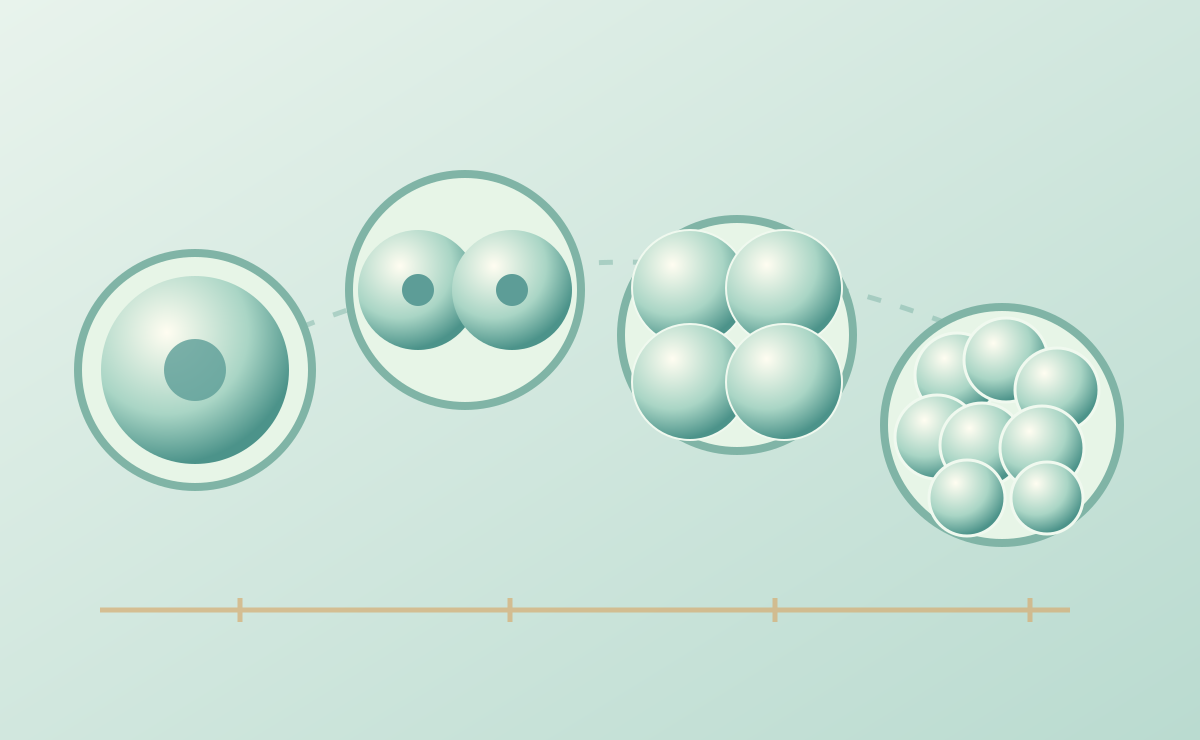
Can a polar body provide useful information about the oocyte and the embryo without directly sampling embryonic cells?
Why this question matters
Polar bodies are formed during meiotic divisions and contain a small, non-random portion of the oocyte’s cellular material. They have long been considered in genetic testing, but their broader molecular content raises additional questions about maternal transcripts, cellular heterogeneity, and the limits of inference.
How the question can be studied
This research direction combines polar-body sampling, molecular profiling, RT-qPCR or digital PCR, and embryo developmental observations. A central goal is to ask which molecular signals are reproducible, how sampling and technical variation influence them, and whether they relate to independent measures of development.
What the work may contribute
The potential appeal is an additional source of information obtained without a conventional embryo-cell biopsy. However, polar-body measurements are not interchangeable with direct embryo measurements, and any clinical interpretation would require substantial validation.
Questions still open
- Which detected transcripts reflect biology rather than sampling or amplification noise?
- How closely do polar-body profiles track developmental competence across patients and protocols?
- What evidence would be required before any clinical application?
Publications and resources
Related verified publications will be linked here after the bibliography is added.